
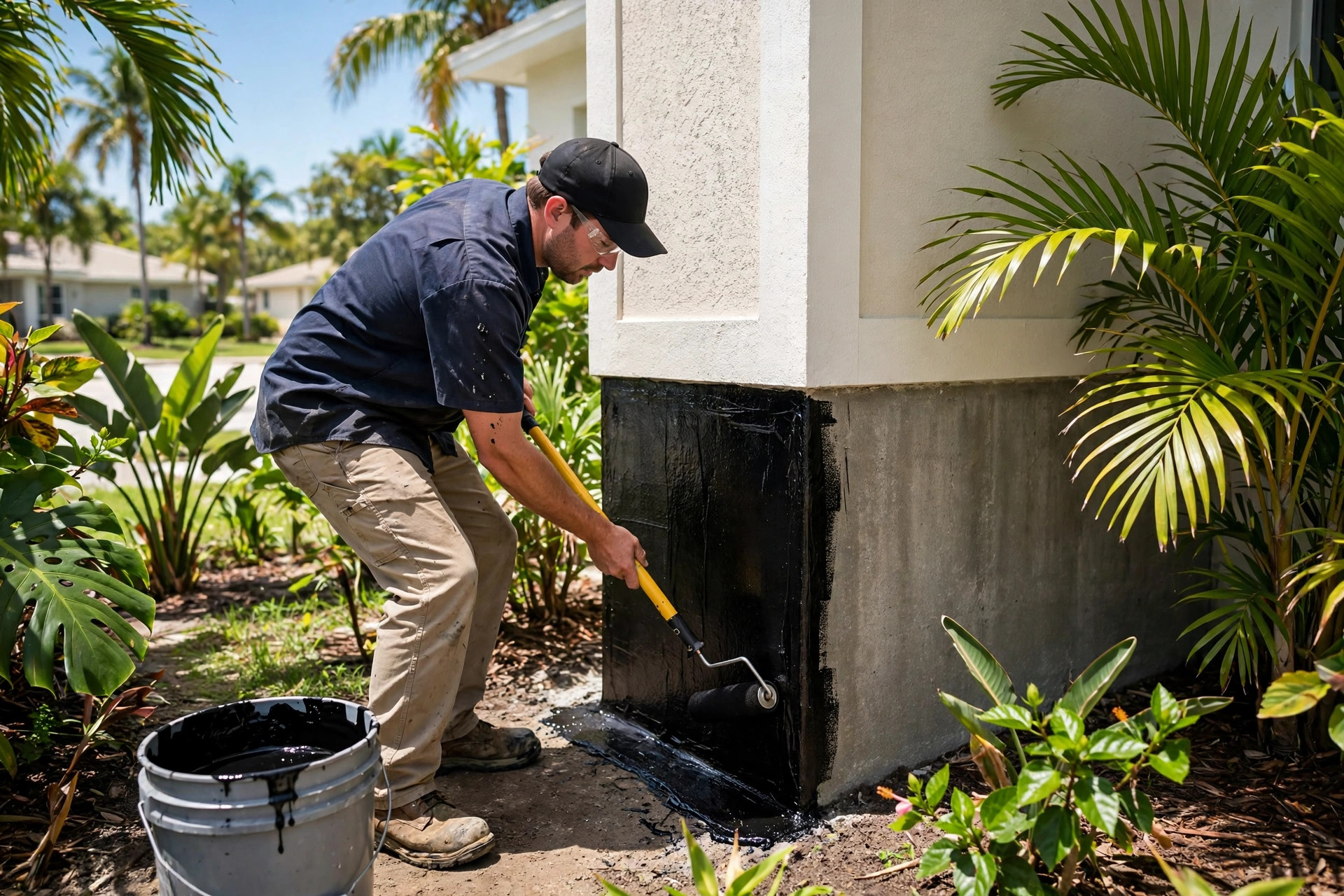
Preventive waterproofing in Miami starts with understanding tropical monsoon patterns and a persistently high water table across Miami-Dade County. Downtown Miami and Brickell high-rises have different vulnerabilities than single-family homes in Coral Gables or Coconut Grove. In older Coral Gables and Little Havana properties, original slab penetrations, tile grout failure and deteriorating stucco let rainwater track into living spaces during heavy afternoon storms. For Wynwood warehouses and properties near Marlins Park or Bayside Marketplace, flash flooding from clogged drains and sheet-flow from impervious pavement is common. Effective waterproofing designs here combine above-grade barriers with subsurface drainage to manage both seasonal downpours and chronic groundwater pressure.
Materials and details matter: elastomeric wall coatings with proper substrate prep work well on stucco façades, while cementitious waterproofing or bentonite panels are better for foundation walls and raised slabs where hydrostatic pressure is present. Balcony and terrace waterproofing must account for tile set systems common in Miami homes—thermally stressed thinset and cracked grout lead to concealed membrane failures. We recommend sealing tile penetrations, installing secondary drainage under the tile, and protecting membrane termination points at doors and sliding glass tracks. Where seawater intrusion is a risk near Biscayne Bay or low-lying Overtown blocks, choose corrosion-resistant flashings and stainless-steel fasteners for long-term performance.
Practical code and permitting realities in Miami-Dade County affect scope: some Coral Gables and Coconut Grove properties in historic districts require preservation-sensitive finishes, which can limit visible membrane work and mandate specific repair methods. Also, many units in Brickell and Downtown Miami are in vertical assemblies where balcony waterproofing must tie into HOA protocols—coordination with property managers is essential. For below-grade areas, sump pump capacity and discharge routing must comply with local drainage rules to avoid sending water to neighbors or city drains during peak storms. We operate Mon–Fri 8am–6pm and Sat 9am–2pm to fit inspections between rain events and management schedules.
Seasonal Maintenance
Inspect waterproofing systems before the wet season and again after the first heavy storms. Look for cracked sealant at window frames, missing or failed roof-to-wall flashings, and clogged scuppers on flat roofs. For properties near Vizcaya Museum or the Design District, where mature landscaping and older drainage tiles are common, clear root obstructions from guttering and French drains. Re-apply elastomeric coatings every few years where UV and sun-driven thermal cycling accelerate wear—targeted re-coating of high-exposure façades prevents water ingress without full replacement.
When To Call Us
If you notice repeating stains on ceilings after storms, efflorescence on foundation walls, or persistent wet flooring near exterior walls in Coconut Grove, Coral Gables, or Hialeah-adjacent neighborhoods, call for a preventive waterproofing inspection. Rapid response before the next wet season often avoids larger repairs like tile replacement or mold remediation. We provide on-site assessments during our regular business hours and prepare scope-of-work reports that distinguish immediate repairs from seasonal maintenance.
Technician insight
In Miami the thing that catches most homeowners is the combination of a high water table and tile-over-concrete construction. Homeowners in Coral Gables and Little Havana often assume a surface patch fixes leaks, but without addressing subsurface drainage or membrane terminations at slab edges the problem returns after the next heavy summer storm.
Wynwood Townhouse: Balcony Leak Turned Preventive Job
Problem → A Wynwood townhouse owner reported recurring leaks through the second-floor balcony during afternoon storms. What we found → the tile system had no secondary drainage and the membrane termination at the sliding door was compromised, plus nearby site grading funneled water toward the unit. What we did → removed tile, installed a bonded secondary membrane with drainage mat, corrected flashing at the door, and regraded the adjacent hardscape to divert runoff. Outcome → after the wet season follow-up the balcony remained watertight and interior staining stopped.
Preventive Waterproofing for Miami Homes Services We Offer
✓Exterior Foundation Waterproofing
Excavate perimeter where feasible, apply cementitious or bentonite-based membranes, and install perimeter drainage that ties into a sump or accepted discharge to lower hydrostatic pressure on foundation walls.
✓Balcony and Terrace Waterproofing
Install or repair bonded membrane systems under tile with secondary drainage, replace failing flashing at sliding doors, and re-level tile as needed to ensure positive drainage away from building openings.
✓Interior Drainage and Sump Solutions
Install interior French drain systems and sump basins for slab-edge seepage scenarios common in low-lying Miami neighborhoods, with pump routing designed to meet Miami-Dade drainage expectations.
✓Roof-to-Wall and Parapet Flashing Upgrades
Replace corroded flashings and reseal roof-to-wall transitions—critical near Biscayne Bay and Bayfront locations like Bayside Marketplace where wind-driven rain exposes seams.
✓Stucco and Balcony Coping Repairs
Correct failed stucco terminations and reinstall metal or tile copings to prevent water entry at parapets and balcony edges, often the source of hidden leaks in older Coconut Grove and Little Havana homes.
✓Perimeter Grading and Hardscape Rework
Regrade landscapes and adjust driveways, walkways, or retaining walls to direct surface runoff away from foundations—important in Brickell and Downtown pockets where impervious surfaces accelerate sheet flow.
How it works
- 1
Site Assessment
We inspect the property for visible leaks, moisture mapping with infrared where appropriate, check sump pump condition and discharge routing, and note roof, balcony, and landscaping conditions that affect water flow.
- 2
Scope & Plan
Based on the assessment we prepare a prioritized plan that separates urgent repairs from preventive upgrades, specifying materials (membrane type, drainage) and any permit or HOA coordination needed.
- 3
Installation
We perform targeted excavation, substrate preparation, membrane installation, drainage tie-ins, and finishing work. For balconies and terraces we test drainage performance before closing up tile or paver beds.
- 4
Verification & Maintenance Guidance
After completion we document drainage paths, take photos of critical terminations, and give a seasonal maintenance list tailored to Miami-Dade conditions so homeowners can monitor system integrity.
Pricing
Costs vary widely by scope: small balcony or flashing repairs can be modest, while full exterior foundation systems or regrading projects are much larger. Price depends on access, excavation needs, tile removal, and whether historic-district approvals are required.