
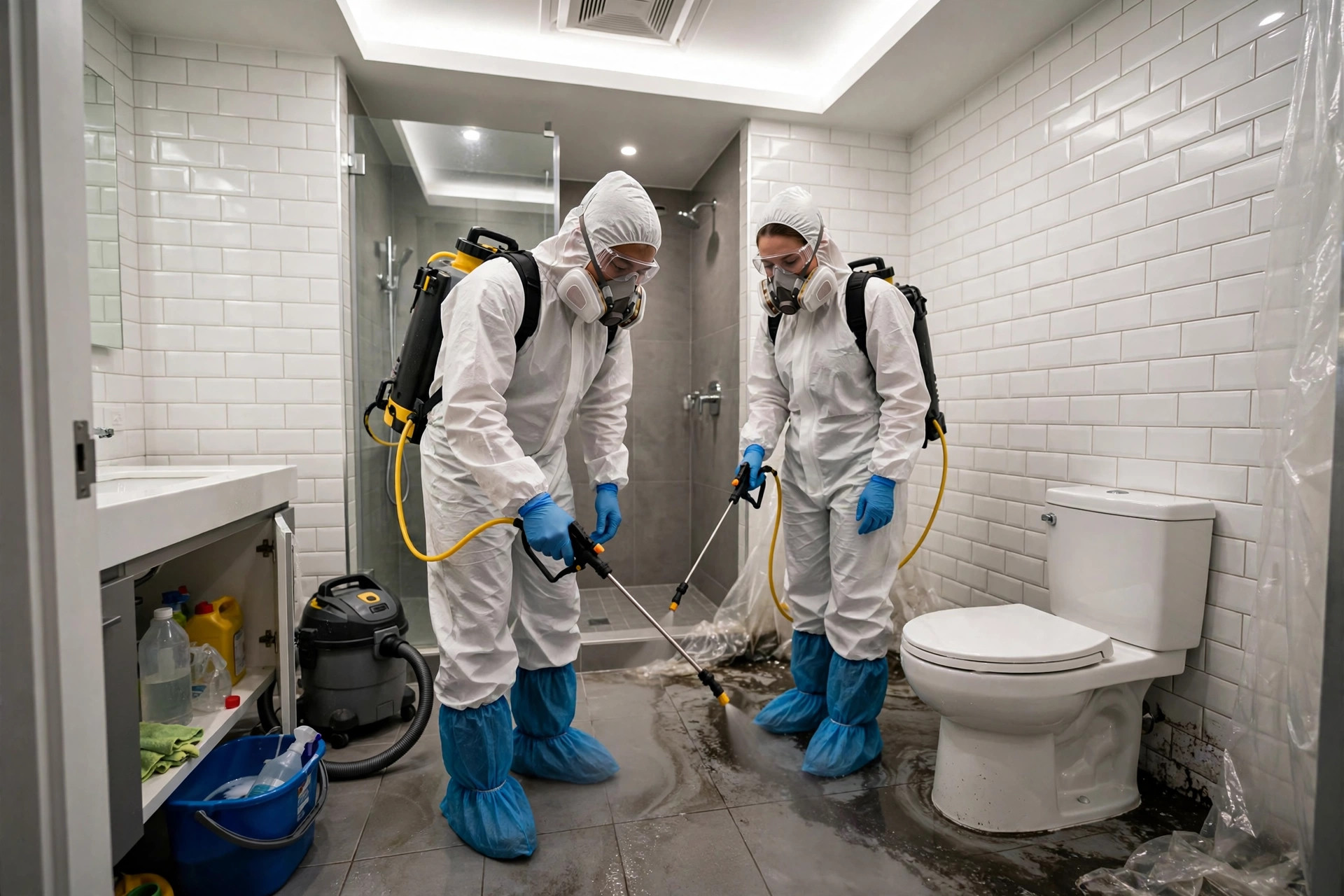
Sewage backups in Miami condos demand a specialist approach because the building types vary so widely: high-rise concrete towers in Downtown and Brickell, mid-century walk-ups in Little Havana and Overtown, and boutique masonry buildings in Coral Gables and Coconut Grove. Each construction type changes how contaminants migrate and what materials must be removed. In high-rises sewer stacks run vertically through many units and may require coordination with building engineers and condo boards. In older low-rise buildings and some units near Biscayne Bay, backflow and storm surge can push contaminated water into slab-level electrical and mechanical spaces, complicating electrical shut-off and drying strategies.
The tropical monsoon climate — hot, wet summers and lingering humidity — makes rapid infection and mold growth the primary danger after a sewage event. Once standing sewage is extracted, microbial colonization can begin within 24–48 hours in porous finishes common to Miami condos such as drywall, carpet padding, and wood trim. For that reason our work emphasizes containment, immediate extraction, and aggressive drying with dehumidification sized for Miami conditions. We also look for salt and brackish water evidence where coastal leaks have occurred; salt accelerates corrosion of metal framing and HVAC components and often means more extensive removal of affected materials.
Practical code and condo governance realities drive many Miami jobs. Miami-Dade County plumbing and building constraints plus condo association rules often require scheduled work windows, elevator protection, and designated waste chutes for contaminated materials. On-site we will document conditions for your adjuster and for condo board records, and we request that clients alert management before we arrive. Safety warnings: Category 3 sewage is a biohazard — do not attempt to mop or vacuum it yourself. Disinfection requires EPA-registered agents applied after removal of solids, and PPE is mandatory where sewage contacts living spaces. Our stated business hours are Mon–Fri 8am–6pm and Sat 9am–2pm to help boards plan access.
Prevention Tips
Keep main sewer cleanouts accessible and known to building management; in many Miami condominiums blockages from grease, landscaping roots, or corroded cast-iron stacks are the common culprits. During hurricane season have your condo's building engineer isolate backup valves and consider a backflow prevention strategy for ground-floor units or parking garages. Regular HVAC and drip-pan maintenance prevents condensate overflows that mimic sewage issues. If you smell sewage or detect slow drains in multiple units of a stack, notify building management immediately rather than relying on temporary fixes, because prolonged contamination increases mold risk in Miami's humid climate.
When It's Not Sewage (What Owners Often Confuse)
Not every brown, foul standing water in a Miami condo is raw sewage. Greywater from washing machines or AC pans can appear similar but requires different handling; we always perform a visual and olfactory assessment and use moisture mapping and testing before demolition. In brick-and-mortar older Coral Gables and Coconut Grove buildings, groundwater intrusion and storm surge may be mixed with sewage — that mixture changes disposal requirements and often means more extensive drying and salt mitigation for metals and masonry.
Technician insight
In Miami, the thing that catches most people out with sewage backup cleanup and disinfection for condos is how quickly mold and odors set in because of the tropical monsoon climate. Another local gotcha is condo governance — elevator reservations, waste chute rules, and board approval often control how fast we can remove contaminated materials, and older stack piping in neighborhoods like Little Havana or Overtown often means a single fix in one unit doesn't stop recurrence.
Ground-floor sewer surge in Coral Gables condo
Problem → A ground-floor unit in Coral Gables reported sewage backing into the bathroom and closet after a heavy summer rain. What we found → Standing contaminated water with saturated carpet pad, browned drywall base up to two feet, and sewer odor tracked into the hallway return. What we did → We contained the unit, extracted sewage, removed soaked drywall and padding, disinfected hard surfaces and performed targeted HVAC cleaning, then set dehumidifiers and monitored moisture until levels were safe. Outcome → Unit dried and cleared for repair work; management received a full remediation report for their records and insurer.
Sewage Backup Cleanup and Disinfection for Condos Services We Offer
✓Emergency Extraction and Tarp Removal
Rapid removal of standing sewage and contaminated materials from condo units, including carpet padding, baseboards, and porous finishes to stop contamination spread and reduce odor.
✓Sanitary Disinfection and Odor Control
EPA-registered disinfection of affected surfaces and targeted deodorization strategies safe for enclosed condos, including HVAC-adjacent treatment when ducts may be impacted.
✓Plumbing Stack and Vertical Line Assessment
Inspection and documentation of condo stack conditions and leaks that caused the backup, with clear reports for condo boards and insurance adjusters — we coordinate but do not perform board-level plumbing permits.
✓Contents Cleaning and Pack-Out
On-site clean and dry services for salvageable contents plus temporary pack-out to a controlled facility when personal items require deeper cleaning or storage during remediation.
✓HVAC Duct Inspection and Contamination Mitigation
Assessment of HVAC systems and supply/return ducts for sewage intrusion, followed by cleaning or targeted sealing to prevent recirculation of bioaerosols in occupied units.
✓Moisture Mapping and Structural Drying
Thermal imaging and moisture mapping to locate hidden saturation in wall cavities and concrete slabs, then staged drying with dehumidifiers sized for Miami's humid summers.
✓Lower-Level Garage and Slab Penetration Cleanup
Sewage cleanup for ground-floor condos and parking garages where slab-level infiltration or storm surge has transported contaminants into mechanical rooms and electrical chases.
How it works
- 1
Initial assessment & containment
We arrive with containment materials and PPE, verify access with condo management or board designee, identify the backup source, and set up physical containment to protect common areas and neighboring units.
- 2
Extraction & removal
Standing sewage and irreparably contaminated porous materials are removed and double-bagged for proper disposal; we coordinate elevator use and chute schedules if required by the building.
- 3
Cleaning, disinfection & odor control
After gross contamination removal we apply surface cleaning, followed by EPA-registered disinfectants and targeted odor control—HVAC treatments applied when ducts or returns show evidence of contamination.
- 4
Drying, monitoring & documentation
We set dehumidification and airflow systems sized for Miami humidity, perform daily moisture readings until targets are reached, and deliver a remediation report suitable for condo boards and insurance claims.
Pricing
Pricing for condo sewage cleanup in Miami varies by severity and building logistics; expect costs to scale with standing volume, need for content pack-out, affected square footage, and whether HVAC or slab work is required. Jobs near Bayside Marketplace or in high-rise Brickell towers frequently carry additional access and elevator protection fees due to board rules.