
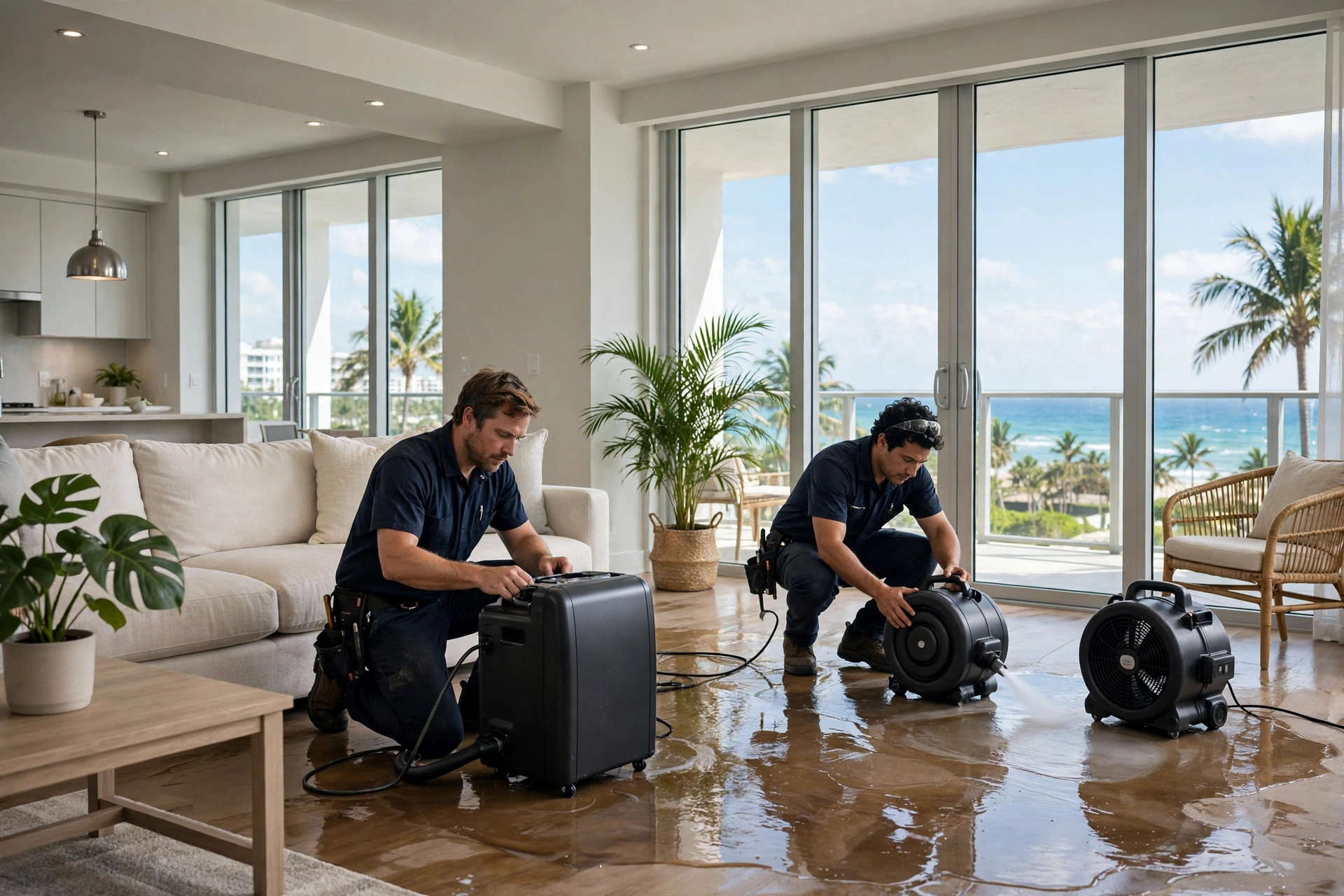
Coastal properties in Miami require structural drying approaches that account for salt, high humidity and a high water table. In neighborhoods like Coconut Grove and Coral Gables you’ll commonly see older masonry and plaster assemblies that absorb moisture differently than newer concrete-block apartments in Brickell or mid-century homes in Little Havana. When we set up a drying plan we size dehumidification and airflow around the building envelope, separate interior from exterior salt-laden air, and watch for trapped moisture in stucco, EIFS, and basewall junctions near slab edges. Work windows and daily monitoring matter in Miami’s hot, wet summers because rapid overnight humidity reversals can re-wet surfaces if equipment isn’t staged correctly.
Salt contamination and chlorides from sea spray change how materials react during drying. In Wynwood lofts and Design District condos with exposed concrete, salt can wick into finishes and accelerate corrosion of fasteners and HVAC coils; for single-family homes near Marlins Park or Vizcaya we check crawlspaces and perimeter grading for capillary rise. Structural drying here often includes targeted removal of salt-stained plaster or isolating contaminated insulation layers rather than aggressive whole-room heat, since elevated temperatures with salt can cause more harm than benefit. We also recommend documenting moisture readings for insurance and future repairs, and coordinate with restorers familiar with Miami-Dade County wind‑ and flood‑related code requirements where applicable.
Coastal properties also bring edge cases: slab-on-grade homes with high groundwater in Overtown or Hialeah-style tile-over-concrete floors, vertical voids in bayfront pilings, and historic lime-based finishes in Coconut Grove that reject high-heat drying methods. For these scenarios we use a mix of LGR dehumidifiers, low‑pressure air movers, and targeted cavity drying tools — and protect surfaces from salt bloom during the process. Expect daily hygrometer logs, corrosion checks on exposed metal, and a staged plan that sequences demolition only where moisture readings show persistent saturation after 48–72 hours of continuous drying.
Business hours and communication matter in fast-moving water events. We operate Mon–Fri 8am–6pm and Sat 9am–2pm to coordinate with homeowners in Downtown Miami, Brickell, and Miami Beach; outside those hours we provide emergency triage guidance for minimizing spread (shutting off power to wet areas if safe, moving valuables above the water line, and avoiding pressurized cleaning that drives salt deeper). Our approach is owner-operated and focused on transparency with moisture logs and visible workmanship you can inspect; we work with plumbers, electricians, and structural contractors when repairs beyond drying are needed.
Technician insight
In Miami, the thing that catches most people out with structural drying services for coastal properties is salt. Salt wicking from sea spray or storm surge will keep materials damp and corrode fasteners even after moisture numbers fall. Older masonry and stucco in Coconut Grove and Coral Gables reacts differently than newer block construction in Brickell, so treating salt and moisture together is the only way to avoid repeat failures.
Storm Surge Near Biscayne Bay — Crawlspace Saturation
Problem: After a high‑tide storm a Coconut Grove bungalow had water in the crawlspace and raised indoor humidity. What we found: Standing water with salt residue, damp insulation and corroding plate connectors. What we did: Removed contaminated insulation, installed sub‑floor ventilation and directed low‑pressure cavity drying with LGR dehumidifiers while documenting moisture reduction. Outcome: Framing dried to safe moisture levels, corrosion areas flagged for contractor repair, and homeowner given a prevention plan for future tidal events.
Structural Drying Services for Coastal Properties Services We Offer
✓Slab and Under‑Slab Drying
Specialized drying for slab‑on‑grade and pier foundations common near Biscayne Bay, using sub‑slab depressurization ports and heat‑controlled dehumidification to address high groundwater and capillary rise.
✓Cavity and Wall Injection Drying
Targeted drying for exterior and interior wall cavities in stucco and block homes in Coral Gables and Little Havana, preventing hidden mold growth without unnecessary demolition.
✓Salt Contamination Mitigation
Assessment and mitigation of chloride and salt deposits from sea spray in coastal zones like Coconut Grove and Miami Beach, including isolating contaminated materials and corrosion checks on fasteners.
✓Post‑Flood Structural Drying
Rapid-response drying for properties impacted by storm surge or plumbing floods near Freedom Tower, Bayside Marketplace, and Marlins Park, focused on minimizing secondary damage to finishes and framing.
✓Crawlspace and Subfloor Drying
Drying and ventilation solutions for low crawlspaces common in older Overtown and Wynwood houses, addressing high humidity and mold risk under floor systems.
✓Historic and Lime‑Finish Sensitive Drying
Low‑heat, low‑pressure drying methods for historic houses around Vizcaya Museum and Coconut Grove to protect lime plaster, decorative trims, and original millwork.
✓Commercial Structural Drying for Retail and Condos
Phased drying plans for mixed‑use buildings and condos in Brickell and Downtown Miami that coordinate with property managers, HOA rules, and occupant access schedules.
How it works
- 1
Rapid assessment and containment
We arrive, document visible damage, take moisture readings in floors, walls and framing, and isolate the wet area to prevent cross‑contamination; in coastal properties we also test for salt on finishes and fasteners.
- 2
Tailored drying plan
We size dehumidifiers, air movers and any sub‑slab or cavity equipment to the building envelope and local conditions — taking into account slab type, age of construction and proximity to tidal influence.
- 3
Active drying and monitoring
Equipment runs continuously with twice‑daily hygrometer logs, corrosion checks where salts are present, and visible progress reports so you can see moisture reduction over time.
- 4
Final verification and handoff
We perform final moisture mapping, advise on repairs for salt‑damaged materials, and provide documentation you can share with contractors or insurers; we also recommend follow‑up checks after heavy storms.
Pricing
Typical projects vary by size and complexity; expect lower costs for single room drying and higher for sub‑slab or extensive cavity work—site visit required for accurate estimate.