
In Miami we see water damage that’s different from inland cities. Buildings in Downtown Miami, Brickell and Wynwood include a mix of high-rises and older masonry warehouses, while Little Havana and Overtown have many wood-frame and concrete block homes. That range matters: concrete and masonry absorb moisture differently than wood framing; drying strategies for a Brickell condo with gypsum board and pressurized air differ from a century-old Coral Gables bungalow with lathe-and-plaster walls. We prioritize containment, moisture mapping and materials-specific drying so that baseboards, structural framing and finishes are diagnosed correctly before demolition starts.
The tropical monsoon climate delivers hot, wet summers that drive both emergency response volume and mold risk. During heavy rains and storm surge events we work near landmarks like Bayside Marketplace and Pérez Art Museum where street flooding and high water tables can push moisture from below-grade concrete into slab-on-grade foundations. In neighborhoods like Coconut Grove and Coral Gables, high landscaping grade or mangrove-adjacent yards can hide saturated soils up against foundations. Our crews factor seasonal groundwater levels and humidity into drying schedules and set up dehumidification and air movement to prevent secondary damage and microbial growth.
Mold remediation in Miami-Dade County requires more than a HEPA-vac and a spray bottle. We focus on identifying the source—leaky roofs in Wynwood warehouses, failed window seals in Brickell towers, or concealed plumbing failures in Little Havana flats—then removing affected materials when necessary and documenting clearance conditions. Building codes and insurance expectations often require visible drying documentation and moisture readings; we record thermal scans and moisture meter logs to show where repairs stop and restoration begins. If structural members are saturated, controlled demolition and structural drying are coordinated with contractors to protect finishes and finish schedules.
Practical on-site decisions are shaped by local realities: high indoor humidity makes drying slower, salt air near Biscayne Bay accelerates metal corrosion, and older houses in Overtown and Coconut Grove can hide mold behind decorative moldings. We explain tradeoffs—preserve historical trim at higher cost and longer drying time, or remove and replace to reduce risk and speed occupancy. For emergencies we can mobilize dehumidifiers and extractors to minimize time to safe re-occupancy and coordinate with plumbers, electricians and local restoration contractors when repairs extend beyond drying and mold control. Business hours: Mon–Fri 8am–6pm, Sat 9am–2pm.
Technician insight
In Miami the thing that catches most homeowners is assuming warm air dries a job fast; high humidity and high groundwater—especially near Biscayne Bay and low-lying Coral Gables streets—often keep materials saturated. We always check slab moisture and behind baseboards even when surfaces look dry.
Condo unit in Brickell—overflowed AC drain
Problem → A third-floor Brickell condo showed ceiling stains after a clogged AC condensate drain. What we found → Moisture had wicked into drywall, insulation and a neighboring closet wall with early mold growth. What we did → Extracted water, removed affected drywall and insulation, set targeted drying and HEPA air scrubbing, and documented moisture reduction for the building manager. Outcome → Closet contents were salvaged, mold growth controlled, and the unit passed documented moisture targets before drywall replacement.
Water Damage Restoration Services We Offer
✓Emergency Water Extraction
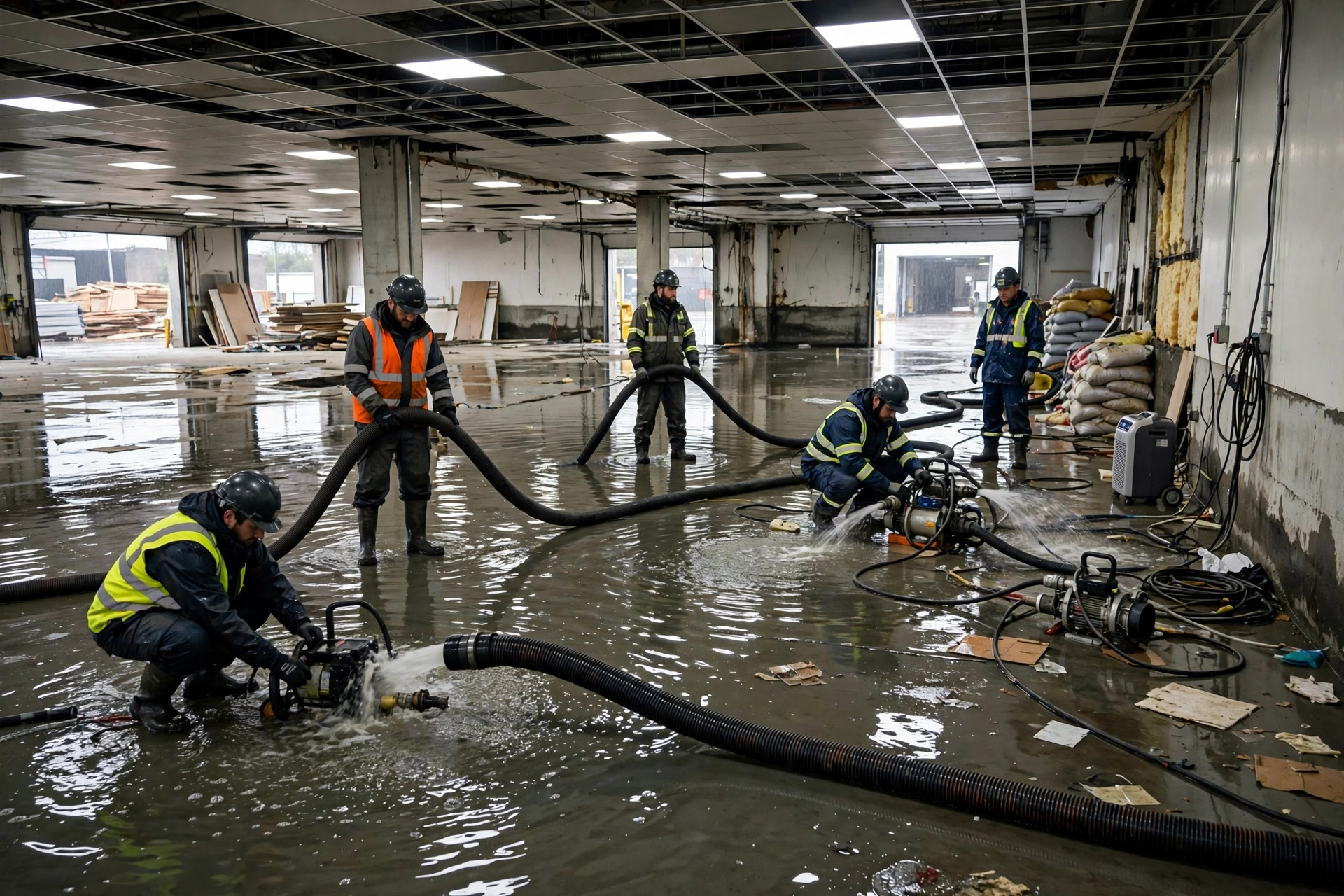
Rapid removal of standing water using truck-mounted pumps and portable extractors for condos in Brickell, first-floor stores near Bayside Marketplace, or flooded basements in Coral Gables.
✓Structural Drying and Dehumidification
Targeted drying plans that combine axial air movers and commercial dehumidifiers calibrated to Miami’s humid climate to dry framing, slabs and finishes without causing secondary damage.
✓Mold Remediation
Containment, removal of moldy materials, HEPA air scrubbing and clearance testing designed for common Miami scenarios like humid crawlspaces or post-storm wall intrusions.
✓Moisture Mapping and Thermal Imaging
Detailed moisture surveys and thermal imaging to locate concealed leaks in Wynwood warehouses, Brickell high-rises and older Coconut Grove homes before invasive work begins.
✓Contents Cleaning and Drying
On-site and pack-out options for salvaging furniture, electronics and textiles affected by floodwater, with specialty handling for antiques common in Coral Gables.
✓Sewage and Biohazard Cleanup
Safe removal and sanitization of contaminated water from sewage backups or sanitary overflows, with disinfection protocols suitable for occupied multi-family buildings in Miami-Dade County.
✓Post-Restoration Repair Coordination
Coordination with local contractors for drywall, flooring and finish carpentry so that structural drying transitions smoothly to rebuild in neighborhoods like Little Havana or Overtown.
How it works
- 1
1) Rapid assessment and containment
We document the scene, stop ongoing water sources when possible, and set containment to prevent cross-contamination—especially important for sewage events or mold in shared walls of multi-unit properties.
- 2
2) Extraction and moisture mapping
Run extraction equipment and perform moisture scans and thermal imaging to locate hidden saturation and to build a drying plan tailored to material types and local humidity conditions.
- 3
3) Drying and remediation
Deploy dehumidifiers, air movers and HEPA filtration, remove non-salvageable materials when necessary, and treat for microbial growth until moisture targets are met and clearance testing is acceptable.
- 4
4) Documentation and handoff
Provide moisture logs, scope recommendations for repairs, and coordinate with your contractor or insurance adjuster to ensure the property in Miami-Dade County is ready for reconstruction.
Pricing
Typical projects vary widely: small water extraction and drying for a single room after a burst pipe is modestly priced, while full-home flood recovery or sewage cleanup costs rise with contamination level, materials removed, and the need for pack-out and specialized mold remediation.