
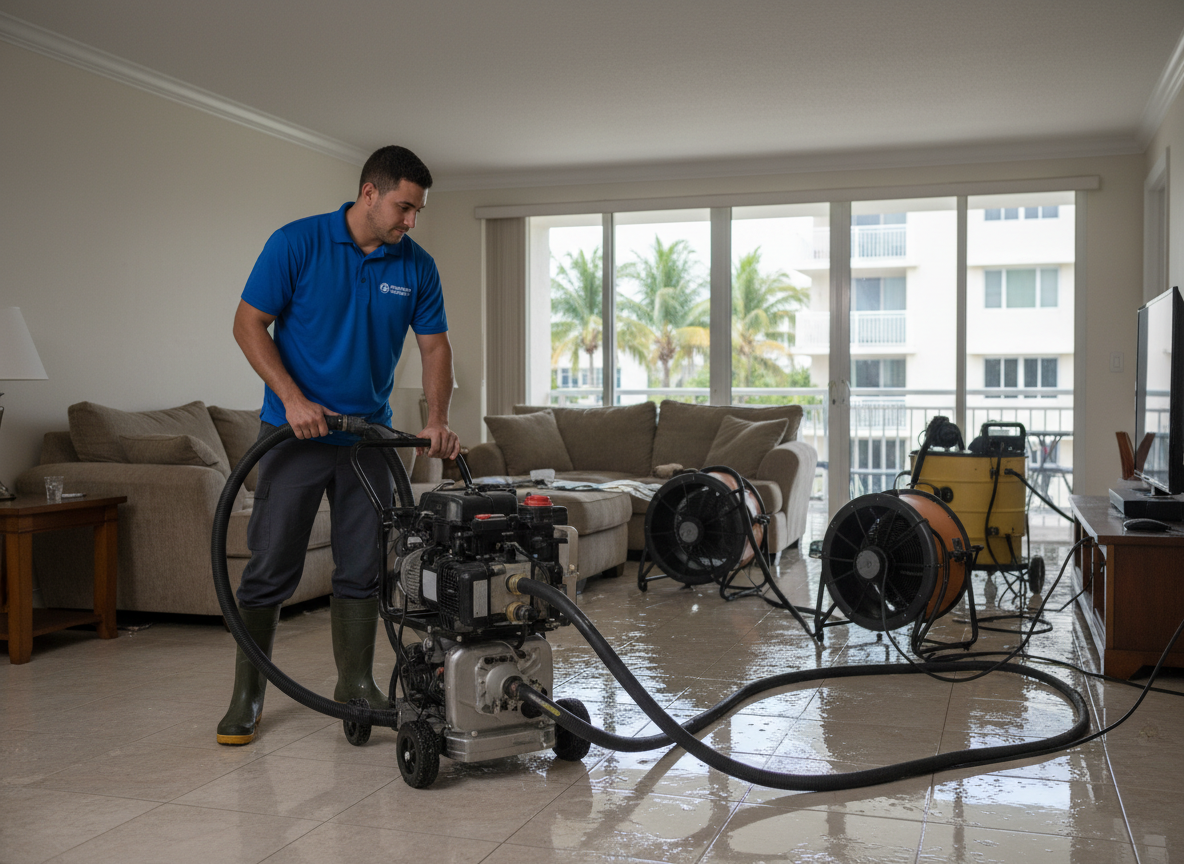
Water damage restoration in Miami demands an approach tailored to tropical monsoon patterns and the diverse building stock across neighborhoods like Brickell, Wynwood, Little Havana and Coconut Grove. Many downtown and Brickell properties are concrete high-rises with water intrusion concentrated at window seals, balconies and parking garages, while older homes in Coconut Grove, Coral Gables and Overtown often have stucco, tongue-and-groove floors or raised pier foundations that absorb water differently. We focus first on categorizing the water source—clean supply, gray water, or sewage—and on containment to prevent cross-contamination in multi-unit buildings near Bayside Marketplace or the Design District.
Materials and assembly matter here. In Coral Gables’ older Mediterranean-style homes we regularly find hard-to-dry wood subfloors and lime-based stucco that hold moisture; in Wynwood warehouses converted to studios the combination of concrete slab, exposed insulation, and art storage creates special drying and corrosion risks for metal framing. We use targeted drying plans (air movers, low-grain dehumidification, and injected cavity drying) and continual moisture mapping to protect finishes. Technicians also watch for secondary damage like fast-developing mold in the wet season—hot, humid summers in Miami-Dade accelerate colonization within 24–48 hours—so timely structural drying and controlled demolition are essential.
Code and practical limits matter: repairs in Miami often intersect with Florida Building Code provisions for flood zones and required materials. When work involves flood-prone properties or ground-level units near Marlins Park or Vizcaya Museum, we document conditions for insurance and for any required scope changes but do not provide legal or insurance advice. For mold remediation we follow containment, negative pressure, and HEPA filtration practices to keep spores from spreading to adjoining units—critical in multi-family buildings around Little Havana and high-density areas like Brickell. Always inspect visible and concealed cavities, baseboards, and slab-to-wall interfaces; what looks cosmetic often hides trapped moisture.
Hours and local response: we operate Monday–Friday 8am–6pm and Saturday 9am–2pm to schedule initial inspections and emergency assessments. Quick access matters in Miami—rising humidity after afternoon storms or a blocked condo roof drain can change a restoration from minor drying to selective demolition in a single day. We coordinate with property managers in downtown condominiums and with homeowners in single-family neighborhoods such as Coral Gables and Coconut Grove to minimize disruption while restoring structural and indoor-air safety.
Technician insight
In Miami the biggest surprise for homeowners is how quickly humidity turns a small leak into widespread mold—especially in older Coral Gables and Little Havana homes with plaster and wood cavities. Slow response or incomplete cavity drying is the most common cause of repeat problems here.
Wynwood studio flood from upstairs plumbing
Problem → an upstairs supply line failed during a storm and soaked a ground-level art studio. What we found → water had wicked into plywood subfloors and behind gypsum walls, with early mold staining at the base of wall cavities. What we did → extracted standing water, performed selective demo to access and dry cavities, set low-grain dehumidifiers and HEPA filtration, and coordinated contents drying for canvases. Outcome → studio dried to safe moisture levels, visible mold removed, and the owner was able to reopen the space for use with minimized restoration scope.
Water Restoration Damage Services We Offer
✓Emergency Water Extraction
Rapid on-site removal of standing water from interiors, garages or basements using truck-mounted pumps and portable extractors to prevent immediate structural damage and microbial growth.
✓Structural Drying and Dehumidification
Tailored drying plans using axial air movers, low-grain refrigerant dehumidifiers, and moisture mapping for concrete slabs, hardwood, and stucco wall assemblies common in Miami homes.
✓Mold Remediation
Containment, controlled demolition of affected materials, HEPA air filtration, and antimicrobial cleaning to address mold growth accelerated by Miami’s hot, humid summers.
✓Ceiling, Wall and Floor Repairs
Selective removal and rebuild of water-damaged drywall, baseboards, and floor assemblies with attention to local finish types found in Brickell condos and older Coconut Grove houses.
✓Sewer and Gray Water Cleanup
Sanitization and decontamination for sewage or gray-water events, including disinfection of impacted assemblies and documentation for insurance claims.
✓Contents Handling and Drying
On-site stabilization, pack-out coordination, and specialized drying for furniture, textiles and electronics salvaged from flooded homes and commercial spaces.
How it works
- 1
1. Rapid assessment
We inspect the site to identify water source, contamination level, and affected materials—documenting conditions in multi-unit buildings or historic homes to determine immediate actions.
- 2
2. Water removal and containment
Perform extraction, shut off the source when possible, and set up containment to prevent cross-contamination and protect non-impacted spaces.
- 3
3. Drying plan and active drying
Implement a moisture-specific drying strategy with air movers, dehumidifiers, and cavity drying; monitor daily and adjust equipment placement until moisture goals are met.
- 4
4. Restoration and final checks
Complete selective repairs, mold remediation if needed, and finish-level cleanup; provide final moisture readings and a walkthrough with the owner or property manager.
Pricing
Costs vary widely by extent, contamination class, access (high-rise balconies or tight Wynwood lofts can add time), and whether selective demo or pack-out is required; expect small, localized drying jobs to differ substantially from full gut-and-rebuild work after a sewage event.